



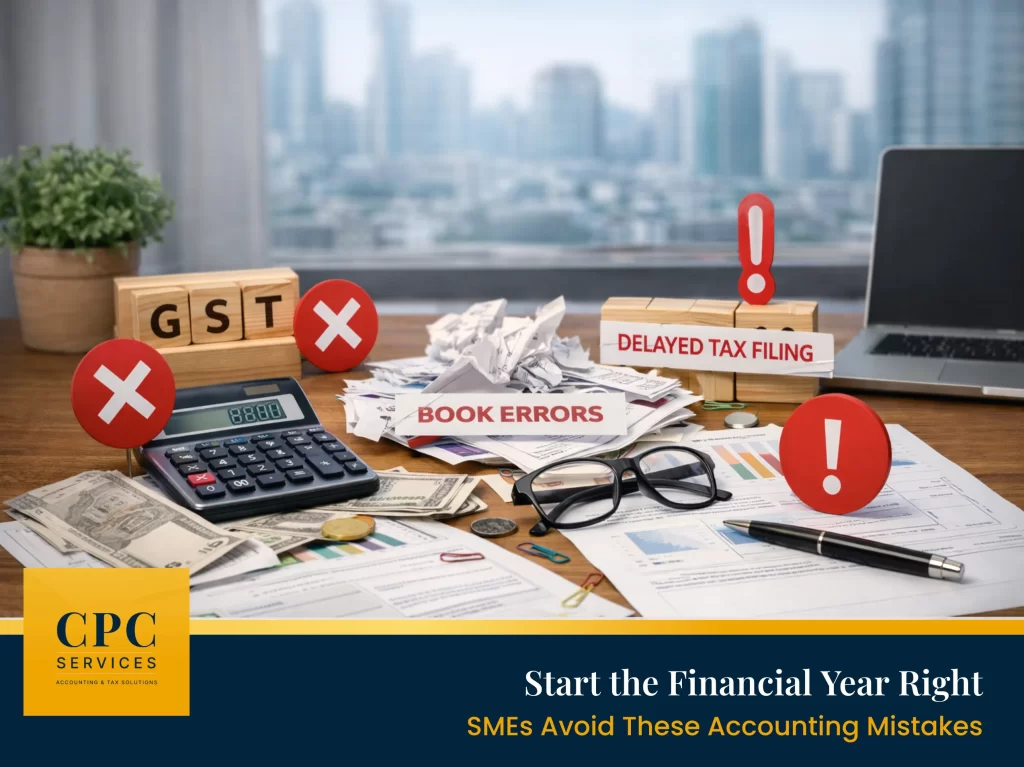
The beginning of a new financial year is a crucial time for every business. For small and medium enterprises, this is when financial records are reset and accounting systems are updated. However, the most common SME accounting mistakes happen right at this stage — and they are easier to prevent than to fix later.
However, many businesses unknowingly make common accounting mistakes at the start of the financial year, which later result in inaccurate financial reports, compliance issues, and avoidable tax complications.
In India, businesses must comply with GST regulations, TDS obligations, ROC filings, PF, and ESIC contributions. Even small bookkeeping errors can grow into major financial and regulatory problems. Therefore, identifying and correcting these mistakes early gives your business a strong foundation for the year ahead.
This blog explains the top SME accounting mistakes at the start of the financial year and practical ways to avoid them — so your business begins with clean books and financial clarity.
What Are the Most Common Accounting Mistakes SMEs Make?
The most common accounting mistakes SMEs make at the beginning of the financial year include:
- Carrying forward incorrect opening balances
- Ignoring bank reconciliation
- Not reviewing receivables and payables
- Failing to update accounting systems
- Ignoring compliance planning
Correcting these mistakes early helps businesses maintain accurate financial records, smooth tax compliance, and better cash flow management.
Quick Tip
At the start of every financial year, allocate a dedicated review session for financial records before regular transactions begin. A few hours of review can prevent months of correction later.
Why the Start of the Financial Year Is Critical for Accounting
The first few weeks of a financial year determine how reliable your financial records will be for the next twelve months. During this period, most SMEs typically carry forward closing balances, review outstanding receivables and payables, and configure accounting software for the new year.
If accounting errors occur during this stage, they can affect:
- Monthly financial statements
- GST return filings
- Cash flow monitoring
- Tax reporting accuracy
- Audit readiness
For small businesses operating with limited accounting resources, avoiding these early bookkeeping mistakes can significantly improve financial control.
Key Takeaway
The quality of financial data carried forward into April determines how accurate your reports, tax filings, and compliance records will be for the entire year.
Top 5 SME Accounting Mistakes at the Start of the Financial Year
Below are the most common accounting errors in small businesses and how to prevent them.
1. Carrying Forward Incorrect Opening Balances
One of the most frequent SME accounting mistakes is transferring incorrect balances from the previous financial year. If the closing books contain errors, the new financial year starts with inaccurate financial data.
Common problems include incorrect debtor or creditor balances, unadjusted provisions, inventory valuation mistakes, and incorrect GST balances. Additionally, these issues often remain undetected for months and distort financial reports.
How to avoid this mistake
- Verify the final trial balance before closing the previous year
- Reconcile major accounts such as debtors, creditors, and GST
- Confirm bank balances and outstanding invoices
An accurate opening balance sheet is the foundation of reliable accounting and bookkeeping.
Important Note
Errors in opening balances do not stay isolated—they affect profit calculations, tax liabilities, and financial statements for the entire year.
2. Ignoring Bank Reconciliation
Another common bookkeeping mistake is delaying bank reconciliation. When bank transactions are not reconciled with accounting records, discrepancies quickly arise. For example, unrecorded bank charges, missing transactions, and duplicate entries can all go unnoticed.
Over time, these discrepancies lead to incorrect financial reporting. However, regular reconciliation is one of the easiest ways to maintain accurate books.
How to avoid this mistake:
- Perform bank reconciliation before starting the new financial year
- Schedule monthly reconciliation throughout the year
- Use accounting software with automated bank feed integration
For SMEs, monthly reconciliation is one of the most effective accounting control practices.
Common Mistake
Many SMEs postpone bank reconciliation until the end of the quarter or year, allowing discrepancies to accumulate and making corrections far more difficult.
3. Not Reviewing Receivables and Payables
Many SMEs overlook pending customer payments and vendor liabilities when starting the new financial year. As a result, businesses carry old receivables that may never be collected, incorrect vendor balances, and duplicate invoices into the new year.
If these balances remain unchecked, financial reports may show unrealistic profits or liabilities. Therefore, a thorough review at the start of the year is essential.
How to avoid this mistake:
- Review accounts receivable aging reports
- Confirm vendor outstanding balances
- Follow up on overdue invoices
- Write off uncollectible debts where necessary
This improves both financial accuracy and cash flow visibility.
4. Not Updating Accounting Software or Systems
Modern accounting relies heavily on technology. Nevertheless, many SMEs fail to properly update their accounting systems for the new financial year. Incorrect financial year configuration, outdated GST settings, and missing ledger updates are all common issues.
In addition, the lack of automation for compliance tracking increases the risk of errors throughout the year
How to avoid this mistake:
At the start of the financial year:
- Configure the new financial year in your accounting software
- Update GST and tax settings
- Review chart of accounts and ledger structures
- Activate compliance reminders and automated alerts
Properly configured accounting software reduces manual bookkeeping errors significantly.
5. Ignoring Compliance Planning
Many small businesses focus only on operations at the start of the financial year. Consequently, they overlook compliance planning entirely. However, statutory obligations continue throughout the year and missing deadlines results in penalties.
Businesses must plan for GST return filings, TDS payments and quarterly returns, ROC filings, and PF and ESIC contributions.
How to avoid this mistake
Prepare a financial year compliance calendar covering all major deadlines:
| Compliance Type | Frequency | Example |
| GST Returns | Monthly / Quarterly | GSTR-1, GSTR-3B |
| TDS Returns | Quarterly | Q1–Q4 filings |
| PF & ESIC | Monthly | Employer contributions |
| ROC Filings | Annual | Company filings |
Planning ahead ensures smooth tax compliance and regulatory management.
SME Accounting Checklist for the Start of the Financial Year
Before moving into a new financial year, businesses should complete this simple checklist:
- Verify opening balances
- Reconcile bank accounts
- Review receivables and payables
- Update accounting software settings
- organize financial documents
- Prepare a compliance calendar
Following this checklist can significantly reduce SME accounting mistakes and keep your books clean from day one.
Best Practice
Maintain a structured accounting review process at the beginning of every financial year that includes reconciliation, compliance planning, and system configuration checks.
Why Accurate Accounting Is Essential for SME Growth
Accurate accounting is not just about tax compliance — it also supports smarter business decisions. When financial records are well maintained, businesses can track profitability accurately, manage cash flow efficiently, secure loans or investor funding, and prepare for audits confidently.
Furthermore, strong bookkeeping systems become the foundation for sustainable financial growth. According to ICAI guidelines, maintaining accurate and up-to-date financial records is a fundamental requirement for businesses of all sizes. Similarly, the Income Tax Department of India outlines clear expectations for record maintenance that every SME should follow.
CPC Insight
Businesses that review their accounting systems at the beginning of the financial year experience fewer compliance issues and maintain more accurate financial reporting throughout the year.
Our Final Thoughts
The start of a financial year offers businesses an opportunity to reset their accounting systems and strengthen financial discipline. By avoiding common SME accounting mistakes at the start of the financial year, businesses can maintain accurate records, ensure compliance, and make better financial decisions throughout the year.
A small investment of time in reviewing financial records today can save significant time, money, and effort later. Starting the year with clean books is one of the smartest financial decisions a business can make.
Need Help with SME Accounting and Compliance?
If your business requires support with opening balance verification, bookkeeping review, GST and tax compliance, or setting up an efficient accounting system, professional guidance can make a significant difference.
CPC Services Pvt. Ltd. provides professional accounting services,, bookkeeping, and corporate compliance support designed specifically for SMEs, startups, and growing businesses. With structured accounting processes and expert financial oversight, businesses can maintain accurate books, stay compliant, and focus more on growth.

